Connections
---
Dyslexia Therapy
---
Connections --- Dyslexia Therapy ---
Connections Dyslexia Therapy
Connections: OG in 3D® is structured literacy curriculum that systematically teaches the entire structure of the English language for whole class or dyslexia/reading intervention. Each lesson provides direct, explicit instruction in the five components of reading, as outlines in the National Reading Panel Report (2000).
Educational therapy is a research-based approach to learning that works by retraining the brain. Through instruction that is structured, sequential, cumulative, and multisensory, this method creates lasting neurological change. Not just skill-building, but a fundamental rewiring of how the brain processes information. As we often say, “We can change your mind.”
No matter where you live, your child can access evidence-based dyslexia intervention. Through live Zoom sessions, our therapists use the multisensory Connections: OG in 3D curriculum to rewire the brain without the commute.
What is Connections Virtual Therapy?
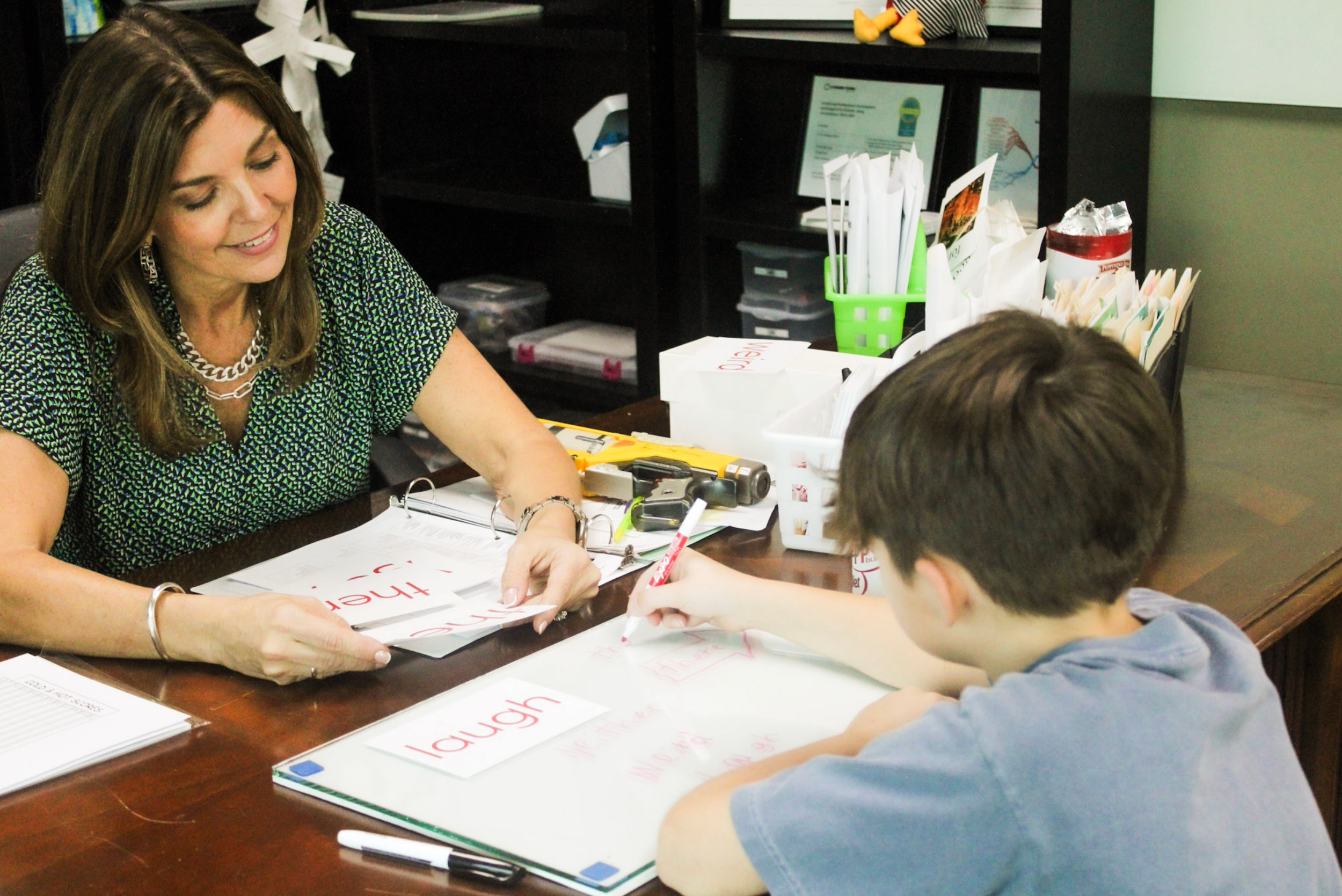
Connections Virtual Therapy brings proven dyslexia intervention into your home through live Zoom sessions. A certified therapist works one-on-one with your child using our Connections: OG in 3D curriculum. Sessions are interactive, engaging, and designed to meet each student exactly where they are.
-
Sessions take place live on Zoom, allowing your child to receive expert instruction from anywhere. Once matched with a therapist, you'll work together to find a session time that fits your family's schedule. Before lessons begin, your student will receive all the materials needed to follow along with the Connections: OG in 3D curriculum and your therapist will have the same materials on their end, creating a seamless, interactive learning experience.
-
If your child works hard but still struggles to read, you're not alone and it's not a matter of effort or intelligence. Connections Virtual Therapy serves students with dyslexia, those showing signs of reading difficulty, and any learner who needs a different approach. We welcome students at any age and do not require a formal diagnosis to get started. Not sure if this is right for your family? Reach out! We're happy to talk through your child's needs.
-
Sessions are 60 minutes each, twice per week. This schedule reflects the fidelity requirements of the Connections: OG in 3D curriculum, which is grounded in research on effective reading intervention. Consistent, frequent sessions allow students to build skills systematically and retain what they've learned between meetings.
-
Call for more information! (870)-530-2024
EFA and Arkansas Literacy Tutoring Grant Approved Vendors

What is Connections In-Person Therapy?
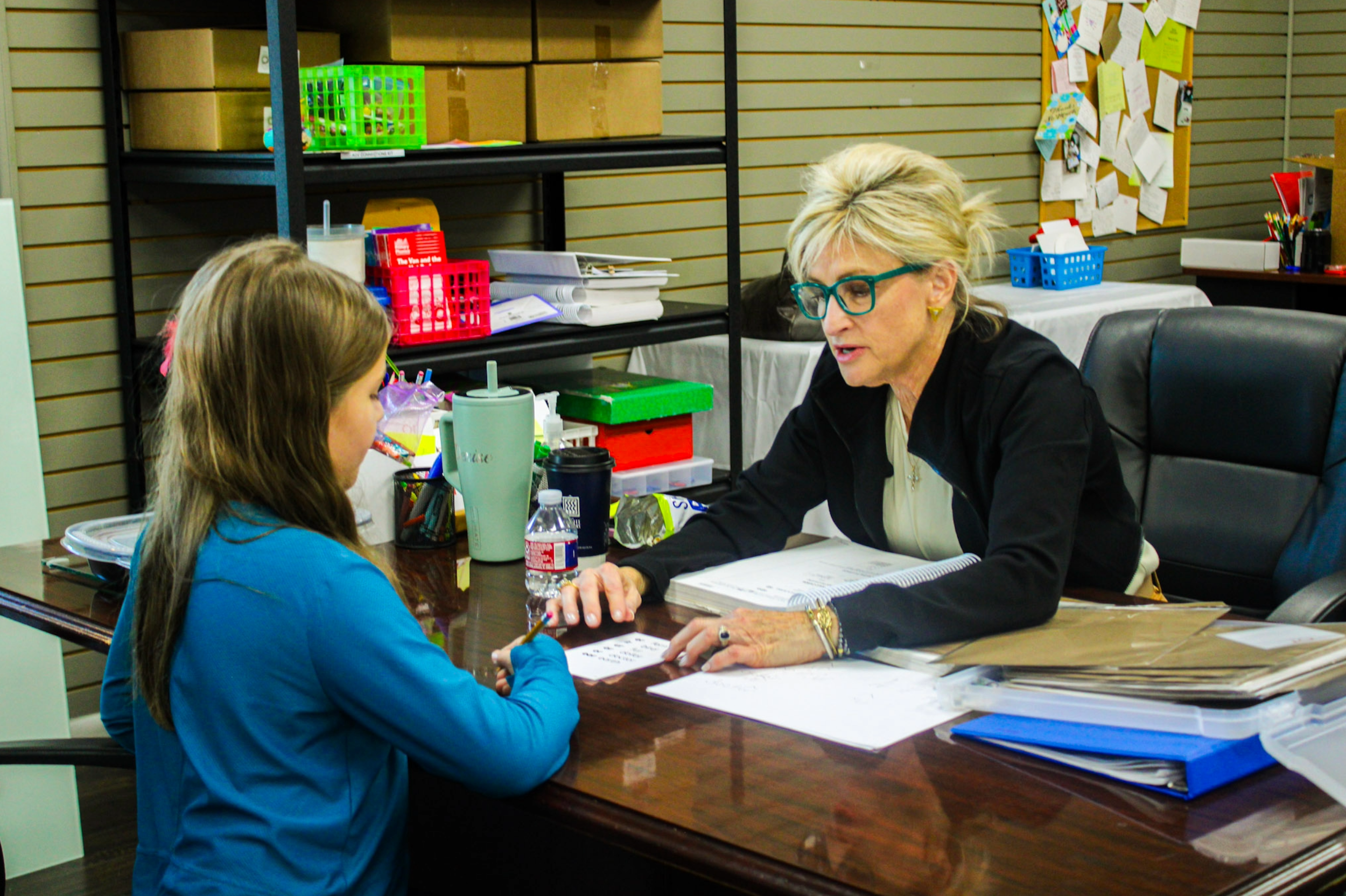
Connections In-Person Therapy pairs your child with a certified therapist for personalized, hands-on sessions built around our proven Connections: OG in 3D curriculum here at The APPLE Group. Sessions are engaging, individualized, and designed to move your child forward, one session at a time.
-
Sessions take place, in-person, at The APPLE Group. Once matched with a therapist, you'll work together to find a session time that fits your family's schedule. Your therapist will have all of the necessary materials, creating a seamless, interactive learning experience.
-
If your child is trying hard but reading just isn't clicking, the answer isn't more of the same, it's a different approach. Connections In-Person Therapy serves students with dyslexia, early reading struggles, or any learner who needs individualized support. No diagnosis required, and we welcome students at any age. Have questions? We're just a message away and happy to help you figure out the right next step.
-
Sessions are 60 minutes each, twice per week. This schedule reflects the fidelity requirements of the Connections: OG in 3D curriculum, which is grounded in research on effective reading intervention. Consistent, frequent sessions allow students to build skills systematically and retain what they've learned between meetings.
-
Call for more information! (870)-530-2024
EFA and Arkansas Literacy Tutoring Grant Approved Vendors
What is an Orton-Gillingham-based Multisensory Structured Language Approach?
Sound-Symbol Association: This is the knowledge of the various sounds in the English language and their correspondence to the letters and combinations of letters which represent those sounds. Sound-symbol association must be taught (and mastered) in two directions: visual to auditory and auditory to visual. Additionally, students must master the blending of sounds and letters into words as well as the segmenting of whole words into the individual sounds
Phonology and phonological awareness: Phonology is the study of sounds and how they work within their environment. A phoneme is the smallest unit of sound in a given language that can be recognized as being distinct from other sounds in the language. Phonological awareness is the understanding of the internal linguistic structure of words. An important aspect of phonological awareness is phonemic awareness or the ability to segment words into their component sounds.
Semantics: Semantics is that aspect of language concerned with meaning. The curriculum (from the beginning) must include instruction in the comprehension of written language.
Syllable Instruction: A syllable is a unit of oral or written language with one vowel sound. Instruction must include the teaching of the six basic types of syllables in the English Language: closed, vowel-consonant-e, open, consonant-le, r-controlled, and diphthong. Syllable division rules must be directly taught in relation to the word structure.
Morphology: Morphology is the study of how morphemes are combined from words. A morpheme is the smallest unit of meaning in the language. The curriculum must include the study of base words, roots, and affixes.
Syntax: Syntax is the set of principles that dictate the sequence and function of words in a sentence in order to convey meaning. This includes grammar, sentence variation and the mechanics of language.
PRINCIPLES OF INSTRUCTION: How is it taught?
Simultaneous, Multisensory (VAKT): Teaching is done using all learning pathways in the brain (visual/auditory, kinesthetic-tactile) simultaneously in order to enhance memory and learning.
Systematic and Cumulative: Multisensory language instruction requires that the organization of material follows the logical order of the language. The sequence must begin with the easiest and most basic elements and progress methodically to more difficult material. Each step must also be based on those already learned. Concepts taught must be systematically reviewed to strengthen memory.
Direct Instruction: The inferential learning of any concept cannot be taken for granted. Multisensory language instruction requires the direct teaching of all concepts with continuous student-teacher interaction.
Diagnostic Teaching: The teacher must be adept at prescriptive or individualized teaching. The teaching plan is based on careful and continuous assessment of the individual's needs. The content presented must be mastered to the degree of automaticity.
Synthetic and Analytic Instruction: Multisensory, structured language programs include both synthetic and analytic instruction. Synthetic instruction presents the parts of the language and then teaches how the parts work together to form a whole. Analytic instruction presents the whole and teaches how this can be broken down into its component parts.
Student-Centered Instruction
Lessons Are Taught to Mastery
As slow as they need or as fast as they can.
Not a Workbook Driven Curriculum
Everything is taught in 3D.
"Use their strength to teach to their weakness.”
— Mary-Margaret Scholtens
Transfer of Knowledge
Students learn the "why," not just how to read and spell.
Progress Monitoring
Checkpoints for Mastery in every lesson.
Is My Child Dyslexic?
Common Characteristics of Dyslexia
Most of us have one or two of these characteristics. That does not mean that everyone has dyslexia. A person with dyslexia usually has several of these characteristics that persist over time and interfere with his or her learning.
-
Difficulty putting ideas on paper
Many spelling mistakes
May do well on weekly spelling tests, but may have many spelling mistakes in daily work
Difficulty proofreading
-
Late learning to talk
Difficulty pronouncing words
Difficulty acquiring vocabulary or using age appropriate grammar
Difficulty following directions
Confusion with before/after, right/left, and so on
Difficulty learning the alphabet, nursery rhymes, or songs
Difficulty understanding concepts and relationships
Difficulty with word retrieval or naming problems
-
Difficulty learning to read
Difficulty identifying or generating rhyming words, or counting syllables in words (phonological awareness)
Difficulty with hearing and manipulating sounds in words (phonemic awareness)
Difficulty distinguishing different sounds in words (phonological processing)
Difficulty in learning the sounds of letters (phonics)
Difficulty remembering names and shapes of letters, or naming letters rapidly
Transposing the order of letters when reading or spelling
Misreading or omitting common short words
“Stumbles” through longer words
Poor reading comprehension during oral or silent reading, often because words are not accurately read
Slow, laborious oral reading